
Laparoscopic Navel Hernia Surgery
Advanced Laparoscopic Navel Hernia Repair in Borivali West
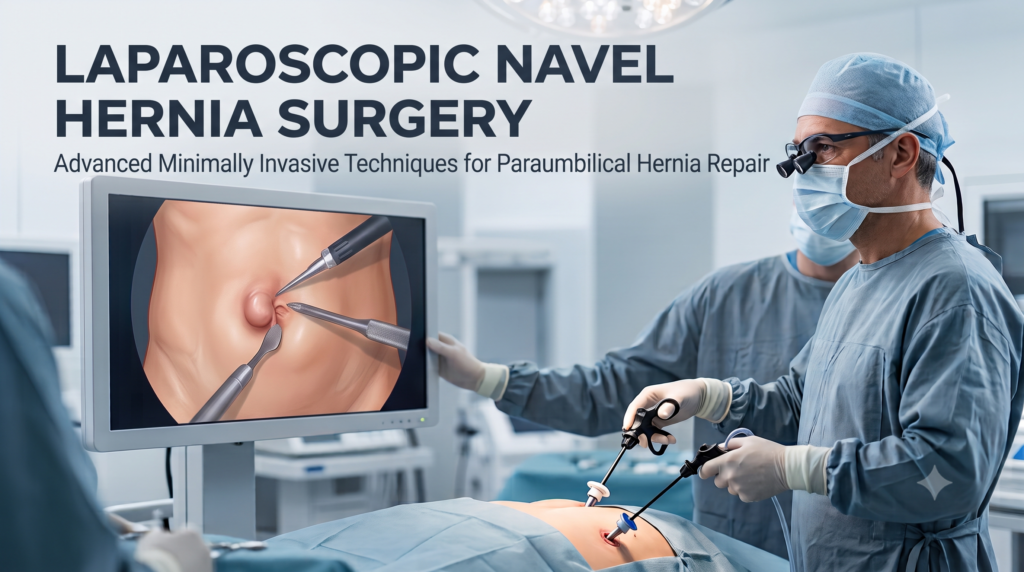
A protruding, tender, or misshapen belly button is often the first sign of a Navel Hernia (also termed a periumbilical or paraumbilical hernia). The navel marks the spot where the umbilical cord connected you to maternal circulation before birth. Because no underlying muscle exists directly beneath this scar, the navel remains an inherent weak point in the human abdominal wall.
If you have observed a swelling around your belly button, Dr. Niraj Singh offers advanced Laparoscopic Navel Hernia Surgery in Borivali West. By employing modern minimal-access instrumentation and dual-surface barrier meshes, Dr. Singh repairs the defect from the inside out, restoring structural abdominal integrity while preserving the natural appearance of your navel.
What Causes a Navel Hernia in Adults?
While infantile umbilical hernias often close naturally during early childhood, adult navel hernias are acquired weaknesses that will never close on their own. Over the years, repeated stretching and elevated intra-abdominal pressure cause the fibrous ring behind the navel to separate. Common contributing factors include:
- Pregnancy: Multiple gestations or carrying heavy pregnancies exert significant stretching forces on the central linea alba.
- Elevated BMI (Central Obesity): Visceral fat exerts constant outward pressure against the umbilical ring.
- Chronic Straining: Longstanding coughs, constipation, or urinary outflow resistance.
- Ascites: Fluid accumulation within the peritoneal cavity caused by liver or cardiac conditions.
- Previous Surgical Incisions: Prior laparoscopic ports or surgical entries around the navel that healed with subtle fascial weakness.
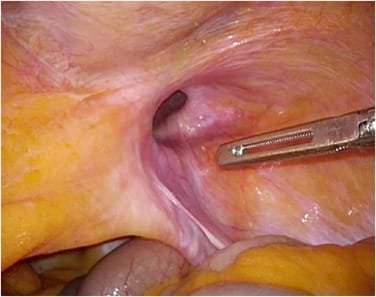
Symptoms: When Should You Seek Treatment?
Navel hernias often start as a modest, painless outward protrusion of the belly button that pops out when laughing, lifting, or coughing. Over time, symptoms usually progress:
- A Visible Bulge: The navel looks pushed outward, distended, or asymmetrical.
- Localized Aching: A dull, pulling ache or sharp pain around the navel after meals or following physical activity.
- Skin Changes: In long-standing hernias, the skin over the navel can become thinned, hyperpigmented, or irritated from friction against clothing.
- Incarceration Symptoms: If the herniated fatty tissue (omentum) or intestine becomes stuck, the bulge becomes hard, exquisitely tender, non-reducible, and may trigger vomiting. This requires urgent surgical care.
The Laparoscopic Advantage for Navel Hernias
For decades, open navel hernia repairs involved an incision directly across or around the belly button, placing sutures or standard mesh right beneath the skin wound. This carried high risks of wound seromas, infections, and a noticeable change in the look of the navel.
Dr. Niraj Singh performs laparoscopic repair using the IPOM (Intraperitoneal Onlay Mesh) technique:
Why IPOM Offers Superior Outcomes?
- Incisions Placed Far From the Weakness: Three miniature incisions (5 mm to 10 mm) are made along the far left flank, leaving the damaged navel skin untouched.
- IPOM-Plus Fascial Closure: Dr. Singh closes the central hole in the muscle wall before laying the mesh, restoring original abdominal wall tension and preventing hollow seroma fluid collections.
- Advanced Specialized Dual-Faced Mesh: The mesh used has two distinct sides: 1) Parietal side (facing muscle): Made of porous polypropylene that promotes rapid, permanent tissue ingrowth. 2) Visceral side (facing bowel): Coated with an anti-adhesive hydrogel or collagen barrier that prevents internal organs from adhering to the mesh.
- Secure Fixation: The mesh is anchored with specialized absorbable fixation tacks or transfascial sutures to prevent displacement.
Recovery: Back to Your Life Without Delay
Because the surgical incisions are tiny and located away from the midline, abdominal wall movements remain comfortable post-surgery:
Hospital Discharge
Most patients go home within 24 to 36 hours.
Cosmetic Preservation
Because the navel skin was never cut, your belly button retains its natural cosmetic appearance.
Mobilization
Gentle walking is encouraged on the evening of surgery.
Diet
Normal, easily digestible meals resume the following day.
FAQs
Everything you need to know under one roof
How long must I avoid heavy lifting after navel hernia surgery?
You should refrain from lifting weights over 5 kg, vigorous core abdominal exercises, and intense gym workouts for approximately 4 to 6 weeks to ensure the mesh incorporates securely into your abdominal wall.
Is a navel hernia the same as an umbilical hernia?
Yes, the terms are frequently used interchangeably in clinical practice. Technically, a true umbilical hernia passes straight through the congenital umbilical ring, whereas a paraumbilical (navel) hernia develops through the fascia immediately bordering the navel ring. Both are repaired using the same reliable laparoscopic mesh techniques.
Can a navel hernia come back after keyhole surgery?
Laparoscopic mesh repairs have an exceptionally low recurrence rate (typically under 2-3%), compared to suture-only open repairs which experience recurrence rates exceeding 15-20%.
Patient Love
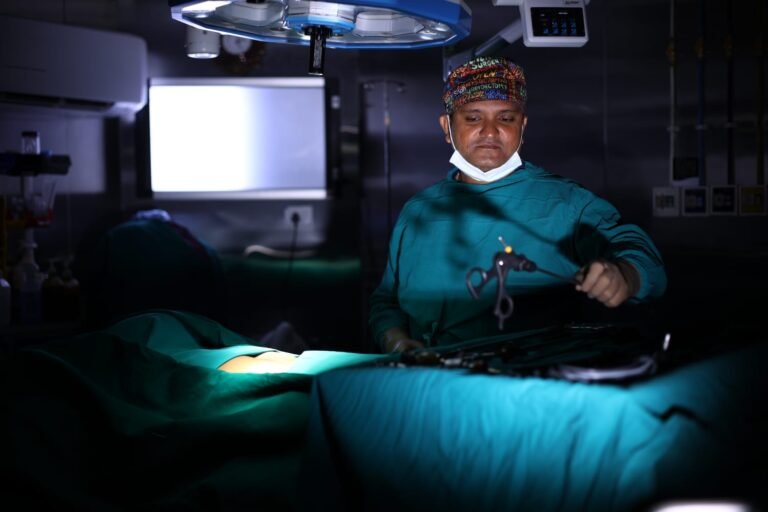
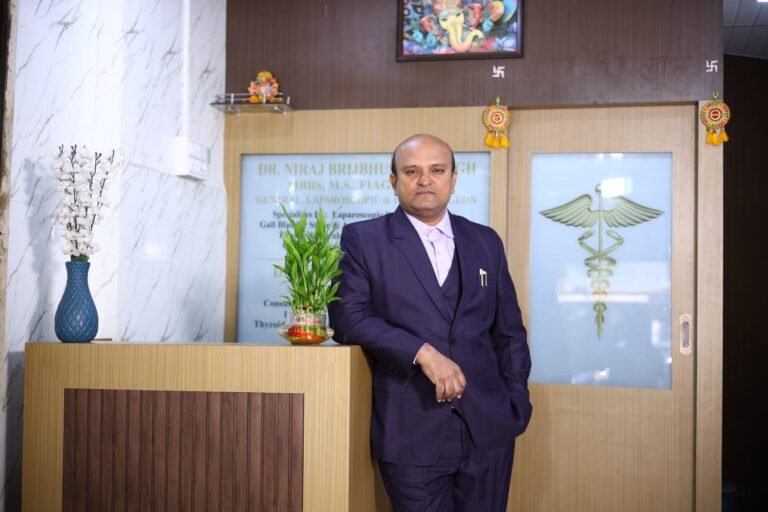
Dr. Niraj Singh is a Consultant General and Laparoscopic Surgeon with expertise in advanced surgical care and minimally invasive techniques.