
Laparoscopic Groin Hernia Surgery (Inguinal Hernia)
Advanced Laparoscopic Groin Hernia Repair in Borivali West
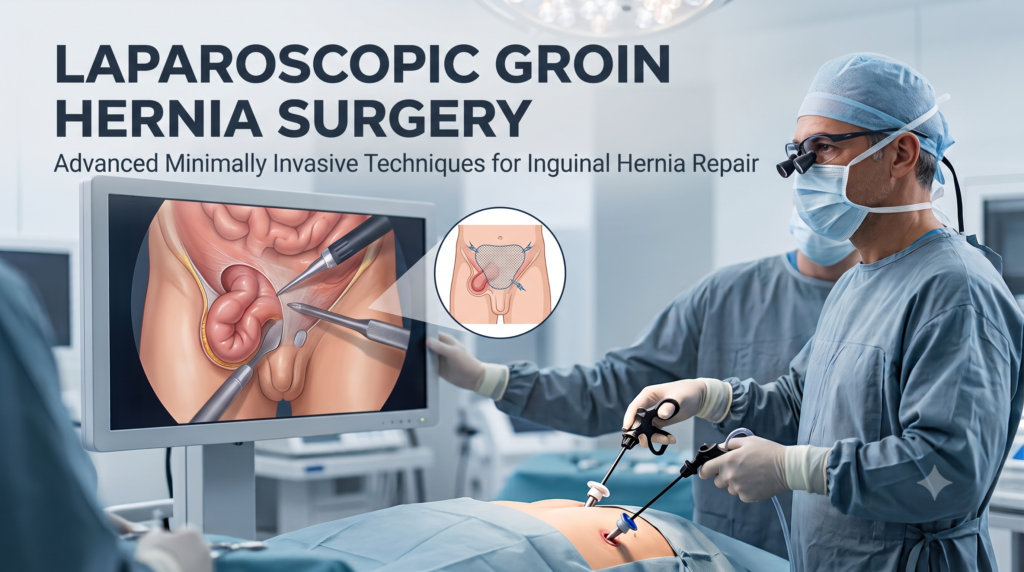
A bulge or dragging discomfort in the groin can disrupt your daily routine, exercise, and peace of mind. Groin hernias—predominantly Inguinal Hernias—occur when internal abdominal tissues or intestinal loops push through weak muscular spots in the lower abdominal wall.
In Borivali West, Dr. Niraj Singh provides advanced Laparoscopic Groin Hernia Surgery using minimally invasive TEP (Totally Extraperitoneal) and TAPP (Transabdominal Preperitoneal) techniques. By placing a prosthetic reinforcing mesh behind the abdominal wall defect, this tension-free repair provides superior structural strength, minimal pain, and a rapid return to work and physical fitness.
What is a Groin (Inguinal) Hernia?
The groin (inguinal) area is an anatomically complex junction where muscles, blood vessels, and nerves converge. During fetal development, natural tunnels (the inguinal canals) allow testicles to descend in men, while accommodating the round ligament in women.
When intra-abdominal pressure rises against this weakened floor, fat or intestine protrudes through, producing a noticeable groin bulge. Over time, this junction can weaken due to:
- Aging and natural loss of muscle elasticity
- Chronic coughing (smoking, asthma, COPD)
- Persistent straining during urination (enlarged prostate/BPH) or defecation (chronic constipation)
- Heavy manual lifting or strenuous sports without core stabilization
- Multiple pregnancies or sudden fluctuations in body weight
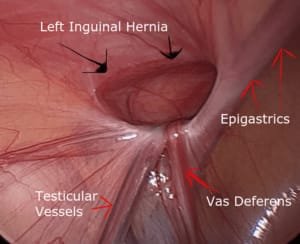
Open vs. Laparoscopic Groin Hernia Repair
Traditional open hernia surgery requires a 6 to 8 cm cut across the groin, cutting through skin and dividing sensory nerve fibers, which can result in long-term groin numbness or chronic nerve pain. In contrast, Laparoscopic Groin Hernia Surgery approaches the defect from the inside or within the abdominal layers:
| Surgical Parameter | Conventional Open Repair | Laparoscopic Repair (TEP / TAPP) |
| Incision Size | Single 6 to 8 cm wound in groin | Three micro-punctures (5–10 mm) |
| Mesh Placement | Placed over the front of the defect | Placed behind the defect (preperitoneal) |
| Mechanical Strength | Held by front sutures | Held naturally by intra-abdominal pressure |
| Bilateral Repair | Requires two separate open incisions | Both sides repaired through the same 3 tiny ports |
| Chronic Groin Pain | Higher incidence due to nerve entrapment | Significantly lower risk |
| Return to Activity | 4 to 6 weeks | 1 to 2 weeks |
Symptoms and Potential Complications
Most groin hernias start small, often presenting as a soft swelling that emerges when standing, coughing, or lifting, and slips back inside when lying down (a reducible hernia). Key warning signs include:
- A noticeable lump in one or both groins, potentially extending down into the scrotum.
- A dull, heavy, dragging sensation in the lower pelvis.
- Burning or aching sensations at the site of the bulge after standing for prolonged periods.
A hernia cannot heal or repair itself through medicines, belts, or exercise. If an intestinal loop gets trapped outside the defect (incarceration), its blood supply can be choked off (strangulation). This is a surgical emergency that can lead to intestinal gangrene. Elective laparoscopic repair protects you from this acute danger.
Modern Techniques: TEP and TAPP Explained
Dr. Niraj Singh selects the optimal technique based on each patient’s anatomy, previous surgeries, and hernia complexity:
- TEP (Totally Extraperitoneal Repair) – The entire operation is carried out within the preperitoneal space between the abdominal muscle layers without breaching the peritoneal cavity where the bowels reside. This eliminates the risk of bowel injury or internal adhesions.
- TAPP (Transabdominal Preperitoneal Repair) – The laparoscope enters the abdominal cavity to inspect internal organs, after which the peritoneal lining over the groin is opened, the hernia reduced, a large 3D anatomical mesh positioned, and the peritoneum closed securely over it. This technique is ideal for very large, irreducible, or recurrent hernias from prior open surgery.
Recovery and Post-Operative Expectations
In Borivali West, Dr. Niraj Singh utilizes minimal access platforms to diagnose and treat a wide spectrum of acute and elective surgical problems:
Day 1
Walking and climbing stairs comfortably within hours after the procedure; discharged home the same day or following morning.
Week 1
Resumption of driving, daily office commute, and desk-based responsibilities.
Week 3–4
Gradual resumption of gym workouts, jogging, and recreational sports (under Dr. Singh’s tailored guidance).
FAQs
Everything you need to know under one roof
Can I use a hernia truss belt instead of undergoing surgery?
A hernia belt (truss) provides temporary mechanical support by pushing the lump inward, but it does not repair the muscular defect. Prolonged use of a truss can cause pressure atrophy of the overlying muscles, increase internal scarring, and make eventual surgery more complex.
What happens if I have hernias in both groins (bilateral hernia)?
Laparoscopy is the gold standard for bilateral inguinal hernias. Dr. Singh can repair both sides through the exact same three tiny keyholes without creating a second incision, saving you from a painful dual-incision open recovery.
Will the surgical mesh cause an allergic reaction?
No. Modern surgical meshes are crafted from inert, medical-grade polymers that have been safely used in millions of operations worldwide without allergic rejection.
Patient Love
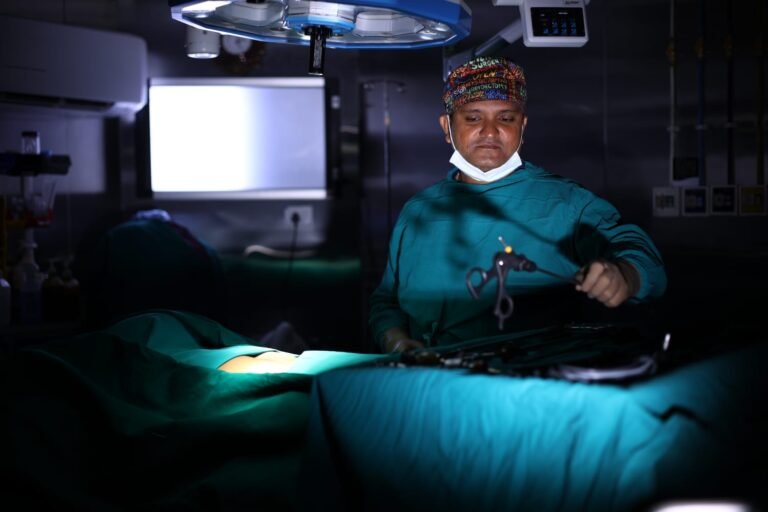
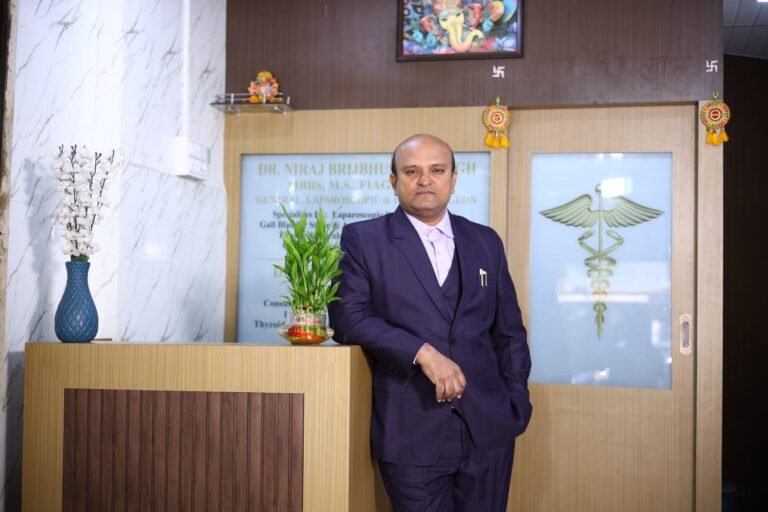
Dr. Niraj Singh is a Consultant General and Laparoscopic Surgeon with expertise in advanced surgical care and minimally invasive techniques.