
Laparoscopic Umbilical Hernia Surgery
Restoring Abdominal Strength: Laparoscopic Umbilical Hernia Surgery in Borivali West
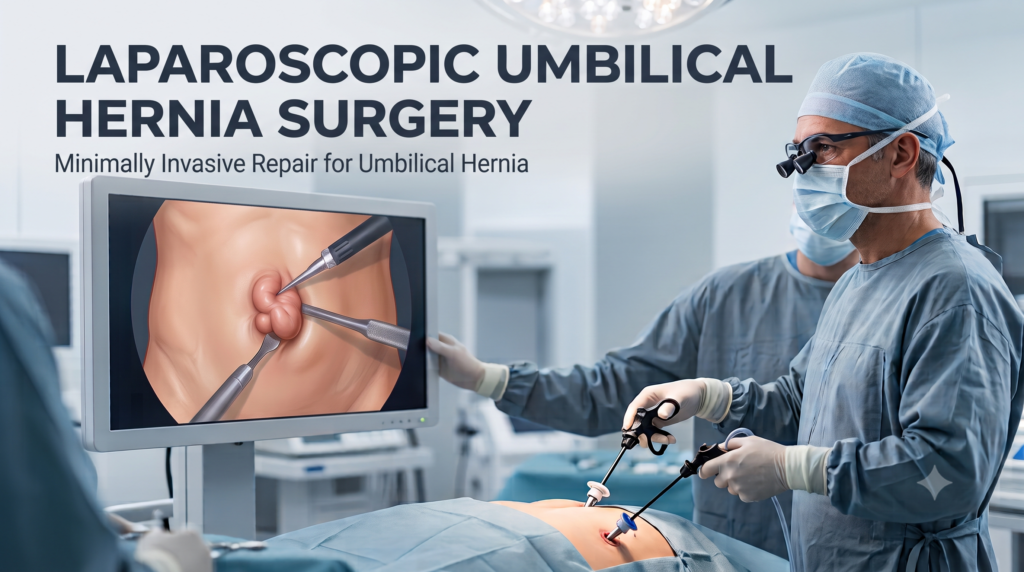
An umbilical hernia represents one of the most frequent ventral hernia conditions seen in general surgery. Characterized by an abnormal protrusion of abdominal fat or intestinal loops through the umbilical ring, it can cause persistent discomfort, posture imbalances, and dangerous intestinal entrapment if left unaddressed.
In Borivali West, Dr. Niraj Singh delivers world-class Laparoscopic Umbilical Hernia Surgery. Utilizing advanced laparoscopic platforms and modern tissue-separating composite prosthetics, Dr. Singh provides durable, tension-free abdominal reconstructions that ensure minimal post-operative downtime, low recurrence rates, and rapid return to everyday life.
Pathophysiology: How Umbilical Hernias Develop?
During embryonic development, the abdominal wall muscles fuse along the midline (the linea alba), leaving an opening for the umbilical cord blood vessels. At birth, this ring constricts and closes.
However, the umbilical scar remains an inherent anatomical weak point throughout adult life. When internal abdominal pressure constantly pushes against this natural gap, the fibrous tissue gives way.
- Intra-Abdominal Pressure Spikes: Heavy manual labor, powerlifting, chronic coughing, or straining due to constipation/prostate enlargement.
- Structural Collagen Weakness: Natural loss of connective tissue elasticity associated with aging or genetic collagen variations.
- Pregnancies: Gravid uterine distension stretches the rectus abdominis muscles laterally (diastasis recti), pulling open the umbilical ring.
- Excess Body Mass: Abdominal adiposity continually presses outward against the central abdominal midline.
Symptoms: Recognizing the Warning Signs
Umbilical hernias are progressive conditions. A small defect rarely remains small indefinitely; continuous abdominal pressure inevitably widens the gap. Common symptoms include:
- A localized bulge at the umbilicus that becomes more prominent when standing up, coughing, or straining.
- A feeling of weakness, pressure, or dragging discomfort in the middle of your abdomen.
- Localized tenderness when bending over or lifting groceries.
- Intestinal symptoms like bloating, indigestion, or localized cramps if an intestinal segment is caught in the opening.
If the hernia becomes firm, turns purplish or dark, refuses to go back in when lying flat, and is accompanied by intense pain, nausea, and vomiting, strangulation may have occurred. This requires immediate surgical intervention to save trapped bowel loops.
Symptoms: Recognizing the Warning Signs
Dr. Singh uses evidence-based surgical methods to ensure long-term repair strength:
- Minimal Access Port Placement – Two to three tiny ports (5 mm to 10 mm) are placed along the patient’s lateral flank. This preserves the skin and tissues around the umbilicus.
- Adhesiolysis and Hernia Reduction – Using delicate laparoscopic graspers and cold-scissor dissection or ultrasonic shears, the herniated fat and bowel loops are safely detached from the umbilical defect and returned to their proper anatomical positions inside the abdomen.
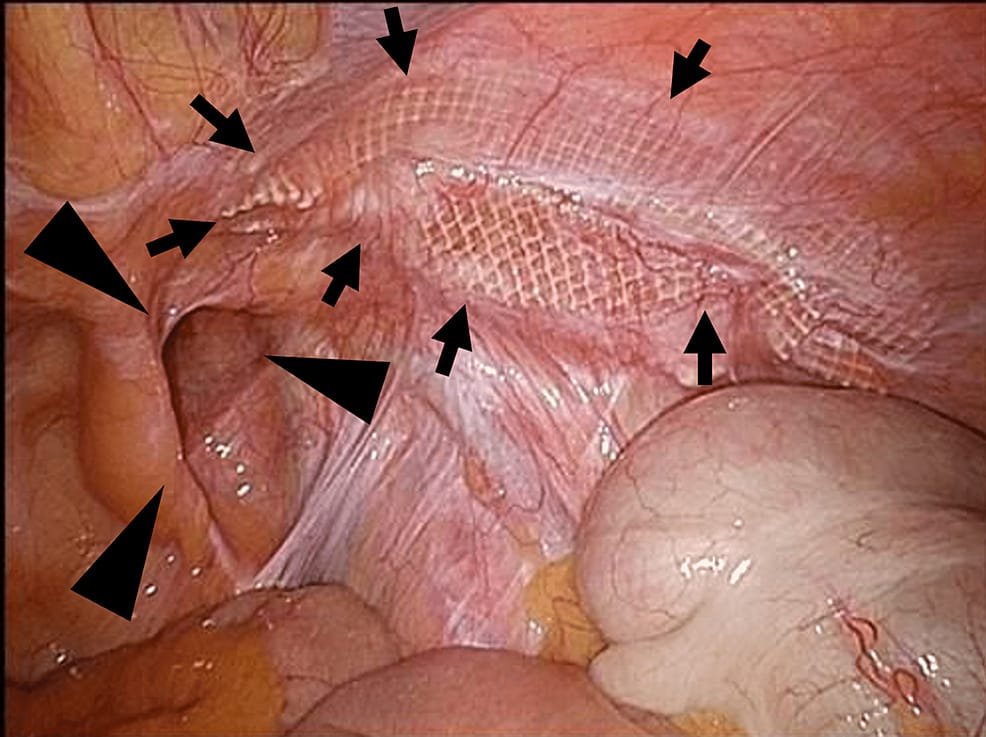
- Defect Closure (IPOM-Plus Technique) – Closing the fascial ring before placing the mesh bridges the muscular gap, improves abdominal core function, and prevents post-operative bulging.
- Placement of Anti-Adhesive Composite Mesh – A generous prosthetic mesh—sized to extend at least 4 to 5 cm beyond all edges of the defect—is introduced. The mesh features an advanced barrier surface on its inner face to prevent internal organs from adhering to it.
- Secure Fixation – The mesh is anchored to the muscular abdominal wall using a combination of absorbable helical tacks and transfascial sutures, ensuring stable, permanent integration.
Why Choose Laparoscopic Umbilical Hernia Surgery?
Modern surgical evidence strongly supports laparoscopic repair over open suture plication, particularly for adult defects larger than 1 to 2 cm:
Wider overlap of the defect with reinforcing mesh
No large cuts through compromised umbilical skin
Uncovers hidden adjacent Swiss-cheese midline defects
Significantly lower recurrence rates (<2-3%)
Lower risk of seroma, hematoma, and wound infection
Fast recovery: discharge within 24 to 48 hours
FAQs
Everything you need to know under one roof
What is the difference between a navel hernia and an umbilical hernia?
Clinically, both refer to hernias at the belly button. "Umbilical hernia" is the formal medical designation for defects centered directly through the umbilical ring. "Navel hernia" is the common layperson term, often encompassing both umbilical and immediate paraumbilical defects. Both are treated using the same minimally invasive laparoscopic mesh techniques.
Can an umbilical hernia heal with exercises and core strengthening?
No. An umbilical hernia is a physical, mechanical tear in the connective tissue fascia of the abdominal wall. Exercise cannot close this fibrous opening; in fact, heavy abdominal crunches and planks often worsen the defect by increasing outward pressure. Only surgical closure provides a permanent repair.
Will I feel the mesh inside my abdomen after surgery?
No. Once the brief initial healing phase passes, the mesh integrates smoothly into your own muscle tissue and becomes an imperceptible, permanent structural component of your abdominal wall.
Patient Love


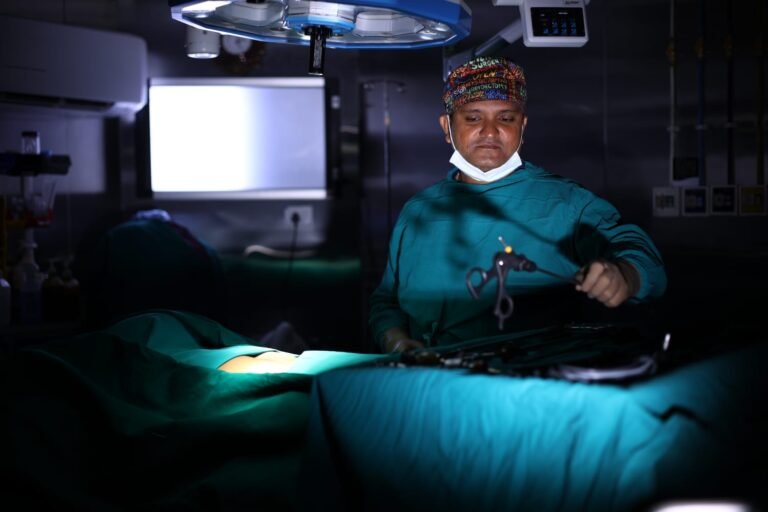
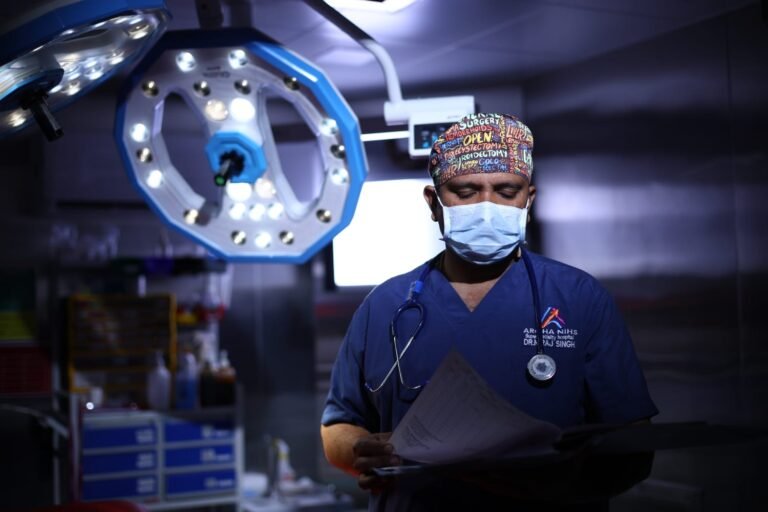

Dr. Niraj Singh is a Consultant General and Laparoscopic Surgeon with expertise in advanced surgical care and minimally invasive techniques.